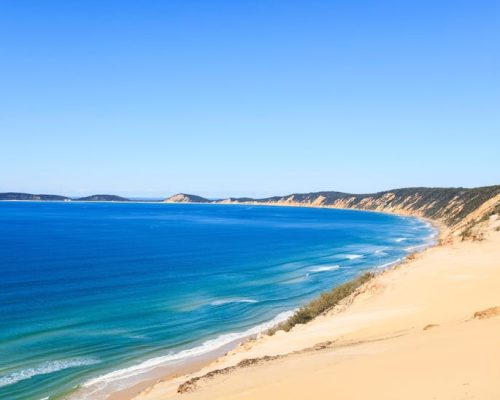
Currimundi Lake is a tidal saltwater lake on the Sunshine Coast, sheltered from ocean swell and surrounded by a protected conservation park. It sits behind Currimundi Beach and is popular for swimming, kayaking and fishing in still water, plus walking trails and wildflower displays through native bushland. It lies about two hours north of Brisbane. Families, nature lovers, cyclists and keen outdoors people all find reason to return, whether for a few hours or a full day trip.
At a Glance
| Feature | Details |
| Location | Behind Currimundi Beach, north of Caloundra |
| Distance from Brisbane | Approximately 2 hours |
| Best for | Swimming, paddling, walking, fishing, wildlife spotting, picnicking |
| Water type | Calm saltwater |
| Facilities | Picnic tables, barbecues, toilets, canoe launching area |
| Parking | Crummunda Park located along Coongarra Esplanade |
| Entry fee | Free (open 24 hours daily) |
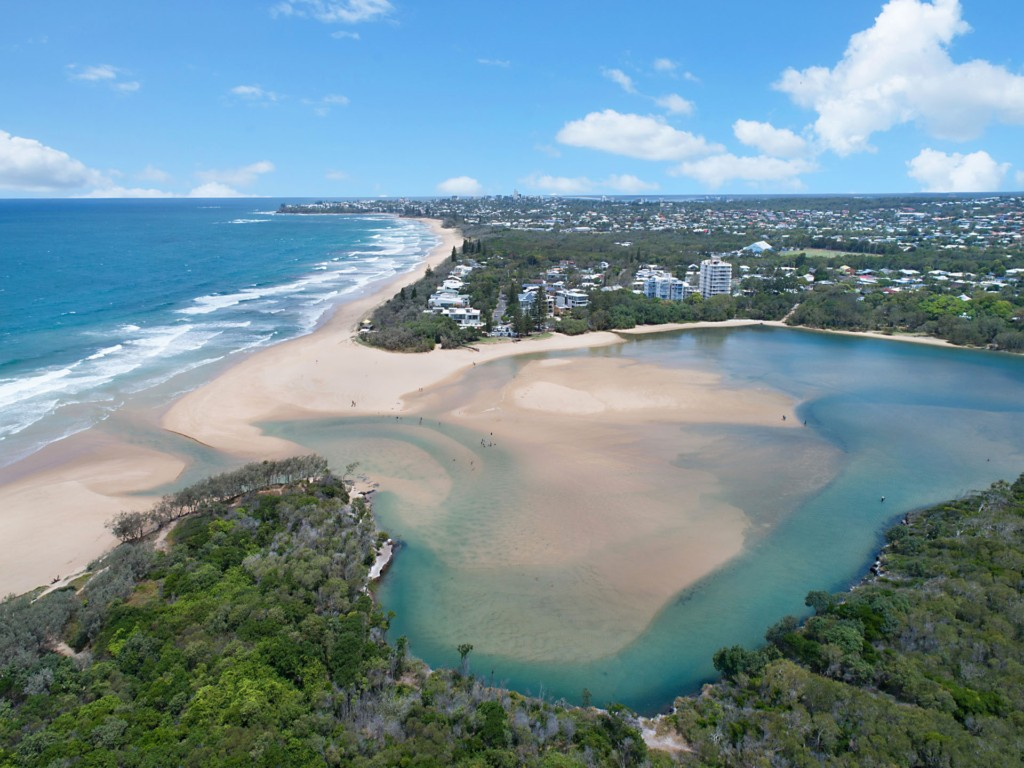
Source: Caloundra Holiday Centre
What Is Currimundi Lake? Location and Overview
Currimundi Lake is a tidal saltwater lake on the Sunshine Coast, sheltered from ocean swell and surrounded by a protected conservation park. It sits behind Currimundi Beach, north of Caloundra. The lake rarely has waves or strong currents, which is why it has become one of the Sunshine Coast’s safest swimming spots for families and the go-to location for paddlers learning kayaking and stand-up paddleboarding. The lake itself offers around 6 km of sheltered waterways to explore by kayak, canoe or paddleboard.
The surrounding Currimundi Lake Conservation Park preserves a small but ecologically important piece of coastal heathland. The park’s habitats shift from open woodland near the entrance to dense rainforest in the interior, and finally to sand dunes at the ocean edge. This variety means a single walk can take you through three distinct ecosystems in a single outing.
Each zone supports very different plants, birds and animals, which is part of what makes the short Heath Circuit such a good introduction to the park. The lake sits about 15 minutes’ drive from Caloundra’s cafes and restaurants, making it easy to combine a morning swim or walk with lunch in town.
Swimming, Kayaking and Fishing at Currimundi Lake
The stillness of Currimundi Lake (no ocean swell, no strong currents) makes it ideal for watersports that would be difficult or impossible on exposed beaches. On any calm day you’ll see kayakers, canoeists and paddleboarders spread across the water, most of them beginners or families learning the sport.
You can bring your own equipment or hire from the equipment shack on the beach. Kayaking and paddleboarding are the most popular rentals. The shallow shelving means children can wade waist-deep quite far from shore, and even a small child can splash safely while an adult swims nearby.
Fishing is also popular at Currimundi Lake, with the estuarine system providing habitat for a variety of fish and prawns. Anglers commonly target species such as bream and whiting, while yabbies can be collected for bait using a yabby pump where permitted under Queensland fishing regulations.
Bring your own line and tackle, or try pumping for yabbies to use as fresh bait. Currimundi Lake’s calm, sheltered waters provide opportunities for recreational fishing, with several easy access points along the shoreline. Remember to follow Queensland’s recreational fishing rules, including any applicable size, possession and bait restrictions

Getting There, Parking and Facilities at Currimundi Lake
Parking is available along the edge of Crummunda Park on Coongarra Esplanade, where you’ll also find picnic facilities, barbecues, toilets and easy access to the lake. Additional parking is available on the southern side of the lake around Westaway Parade. Parking can become congested at busy times, so arriving earlier is a good idea during popular periods.
Facilities at Crummunda Park include:
- Picnic tables, shelters and barbecues
- Public toilets
- Canoe and kayak launching access
- Plenty of natural shade
- Playground and exercise equipment
- Beach showers
- Parking and easy access to Currimundi Lake
Crummunda Park also has wheelchair-accessible toilets. For walkers continuing into the adjoining Currimundi Lake (Kathleen McArthur) Conservation Park, the first 140 m of the Heath Circuit is sealed bitumen, while the trails beyond are predominantly compacted or sandy natural surfaces. There are no wheelchair-accessible facilities within the conservation park itself.
Swimming Safety at Currimundi Lake
Currimundi Lake is popular with families thanks to its generally calm, sheltered waters, offering an alternative to swimming at the adjoining ocean beach. The lake is an estuarine coastal lagoon, so its water conditions and salinity naturally change depending on rainfall, tides and whether the entrance to the ocean is open or closed. Swimming is permitted, although visitors should stay clear when the lake entrance is being opened, as strong currents can occur when water is released to the ocean.
Water levels at Currimundi Lake naturally vary depending on rainfall, inflows, tides and whether the lake entrance is open or closed to the ocean. When the entrance is open, tidal movements can affect water levels, and at low tide it may even be possible to wade across the entrance. The broad sandy area around the lake entrance is particularly popular with families and young children, although conditions can change and extra care should be taken whenever water is flowing strongly through the entrance.
Watch for jet skis and boat traffic, especially mid-morning to late afternoon on weekends. Most users are considerate, but swim in a group and watch the water.
While Currimundi Lake itself is not identified as a patrolled swimming area, part of neighbouring Currimundi Beach is patrolled. The Currimundi Lifeguard Tower is located at the northern end of Watson Street near Cliff Hargreaves Park, with patrols operating on weekends, school holidays and public holidays throughout the year. For the safest swimming, always check current conditions and swim between the red and yellow flags at the patrolled beach.
Walking Trails at Currimundi Lake
The Currimundi Lake Conservation Park features several interconnected walking trails graded by difficulty and length. A downloadable map is available from the Queensland Department of Environment, Science and Innovation showing all trails, hazards and facilities.
Essential items for any walk: a hat, sunscreen, plenty of water and sturdy, comfortable walking shoes. Many of the park’s tracks are sandy and can be soft underfoot. From January to June, some wet heathland sections can also become waterlogged, slippery and boggy. If a track is covered by water, turn back rather than walking through or around the affected area.
Trail Comparison
| Trail | Distance | Time | Grade | Best For |
| Heath Circuit | 1.4 km return | Allow 40 minutes | Grade 2 | Short, easy bushwalks |
| Beach Access Track | 2 km return | Allow 1 hour | Grade 3 | Bushwalking and beach access |
| Coastal Pathway: Dicky Beach to Currimundi Lake | 1.7 km one way | Allow your own pace | Easy | Families, walkers and recreational cyclists |
Heath Circuit – Grade 2
Distance: 1.4 km return | Time: Allow 40 minutes
The Heath Circuit is a short walk through the diverse vegetation of Currimundi Lake (Kathleen McArthur) Conservation Park. The first 140 metres follows a sealed bitumen path to a viewpoint overlooking Currimundi Creek before the circuit continues along hardened or compacted surfaces. As a Grade 2 walk, it is suitable for most ages and fitness levels, and no previous bushwalking experience is required.
Along the way, the circuit passes through coastal heath and other native vegetation, providing opportunities to appreciate the park’s plant and birdlife. Gentle hills may occur along the route, and walkers should be prepared for sandy sections and changing track conditions.
Beach Access Track – Grade 3
Distance: 2 km return | Time: Allow 1 hour
The Beach Access Track branches from the Heath Circuit and leads through the conservation park towards the beach. This Grade 3 walk follows predominantly sandy tracks and may include short steep sections, rough surfaces and steps. QPWS recommends some bushwalking experience, although the track is suitable for most ages and fitness levels.
The track passes through the park’s coastal vegetation before reaching the beach and dunes. Wear sturdy footwear suitable for sandy tracks, and be aware that some sections can become waterlogged, slippery or boggy, particularly when the wet heathland is inundated between January and June.
Coastal Pathway – Dicky Beach to Currimundi Lake
Distance: 1.7 km one way | Difficulty: Easy
Rather than being a 9 km Currimundi trail, this walk forms part of the Sunshine Coast’s much larger Coastal Pathway, which extends approximately 73 km from Bells Creek in the south to Coolum Beach in the north. The Dicky Beach to Currimundi Lake section provides a convenient way to experience a shorter stretch of the pathway.
This approximately 1.7 km one-way section connects Dicky Beach with Currimundi Lake and is suitable for walking and recreational cycling. Sunshine Coast Council classifies the route as easy and suitable for the whole family, making it a good option for visitors looking for a relaxed coastal outing rather than a dedicated bushwalk.
Picnicking at Currimundi Lake
Crummunda Park is a popular spot for picnicking along the shores of Currimundi Lake. The main parkland near Mandara Drive offers plenty of natural shade, picnic facilities, barbecues and seating, with additional picnic facilities and barbecues located throughout the park.
If you prefer a quieter, more informal picnic, you can spread a blanket on the grass near the water or find a spot under the larger native trees. There are several large, mature paperbarks that create natural shelter. The lake shore is gentle and grassy, not rocky or steep, making it easy to relax safely with children.
What to bring: Picnic food, drinks (no commercial drinks available), sunscreen, hat.
Facilities on site: Free barbecues (first come, first served), public toilets, picnic tables with attached benches.
Tip: Visit mid-week or out of school holidays for a quieter experience. Weekend lunchtimes (12 to 2 PM) in summer can be quite busy.
Where to Eat at Currimundi Lake
One of the best things about spending time at Currimundi Lake is combining your walk and swim with a good coffee or a meal. There are a couple of relaxed cafés right beside the lake, making it easy to grab breakfast or lunch without leaving the waterfront.
Coco’s By The Lake sits at 1 Westaway Parade, directly opposite Currimundi Lake and only metres from the water. It is a casual, family-friendly spot serving breakfast, brunch and lunch, with options including burgers, fish and chips, seafood, café favourites, coffee and sweet treats. Current trading hours are generally 7:30am to 3:00pm Monday to Friday and 7:30am to 4:00pm on weekends.
There is free parking in the surrounding area, although spaces close to the lake can become busy on weekends and during school holidays. With the lake and beach just across the road, Coco’s is particularly convenient if you want to pick up takeaway and find a shady spot by the water.
On the eastern side of the lake, Thrills Espresso Cafe & Sunset Bar at 1 Watson Street is another waterside option. It offers breakfast and lunch, coffee, burgers and lighter meals, with vegetarian and gluten-free options also available. Its location beside the Currimundi Lake foreshore makes it an easy stop before or after a swim, walk or paddle.
Current listed hours are approximately 6:30am to 3:00pm on weekdays, with longer hours on weekends, although published opening times vary slightly between sources. Free street parking and a free parking area are available nearby.
If you are visiting on the third Friday of the month, you may also catch the Currimundi Lake Twilight Markets, which operate from around 4:00pm to 8:00pm, excluding the winter months of June and July. The markets bring food stalls, drinks and a relaxed sunset atmosphere to the lake foreshore.
Good to know: Café, market and kitchen hours can change seasonally, on public holidays or due to weather and special events. It is worth checking current opening hours with the venue before making a special trip.
Wildlife Spotting at Currimundi Lake
The park’s diverse habitats including coastal heath, open forest, woodland, low closed forest with rainforest species and coastal dune vegetation support a variety of native wildlife, particularly birds. Early morning and late afternoon are the best times for wildlife spotting, as animals are generally most active during the cooler parts of the day. Keep an eye on the sandy walking tracks for signs of wildlife, including tracks left by birds, lizards and snakes.
Kangaroos and wallabies are present in the open woodland areas; they’re often most visible in early morning. Koalas use the eucalypt trees but are harder to spot. Possums and gliders are nocturnal, so unless you visit at dusk, you’re unlikely to see them. Reptiles (snakes, monitors and skinks) are present but shy and rarely encountered if you stay on the path.
The three-ecosystem walk through woodland, rainforest and dune is what makes bird spotting so varied here: different habitats hold different species within a short distance of each other.
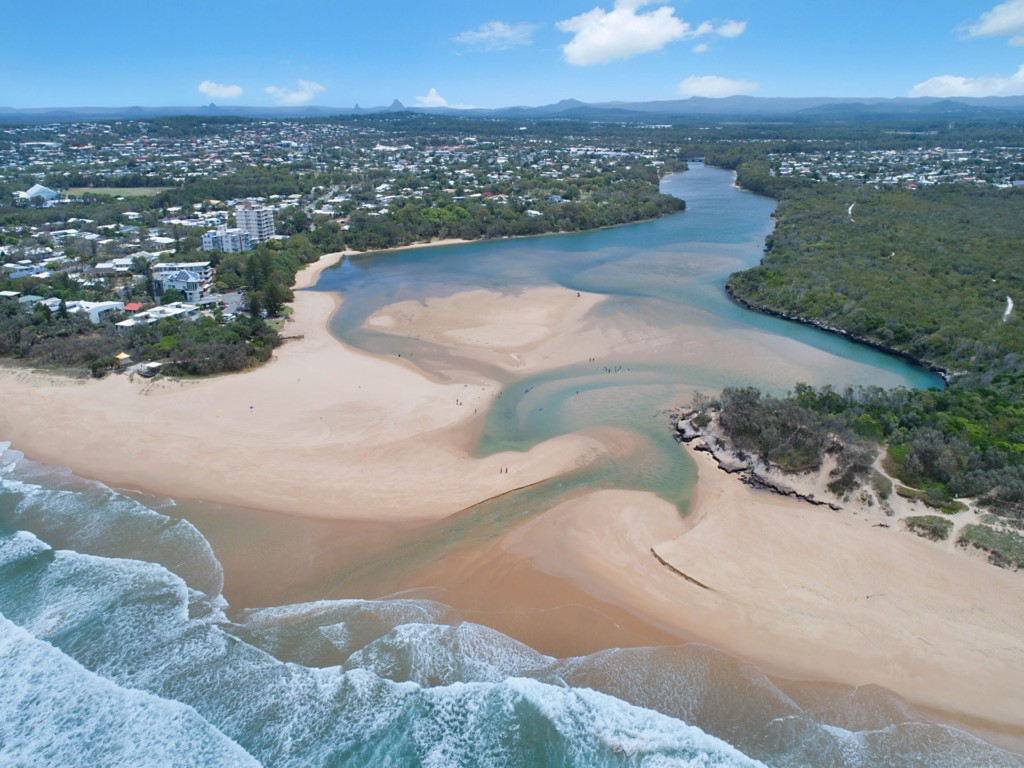
Source: Caloundra Holiday Centre
Birdwatching at Currimundi Lake
More than 100 bird species have been recorded in and around Currimundi Lake (Kathleen McArthur) Conservation Park. Some birds can be seen along the coast year-round, while others are migratory or move in and out of the park as seasonal conditions and food sources change.
Birds commonly seen in and around the park include:
- Rainbow lorikeets – colourful and social birds that live along the coast year-round
- Friarbirds – members of the honeyeater family, with both noisy and little friarbirds recorded in the area
- Little wattlebirds – honeyeaters that can be spotted feeding among the park’s heath
- Laughing kookaburras – also recorded in and around the conservation park
Seasonal and visiting birds to look for include:
- Migratory shorebirds – species recorded in and around the park include red-necked stints, bar-tailed godwits, whimbrels and marsh sandpipers
- Rainbow bee-eaters – colourful insect-eating birds that can be spotted hunting over the park’s heath habitat
- Honeyeaters – white-cheeked, blue-faced, scarlet and Lewin’s honeyeaters can be seen feeding among flowering heath, with birds moving in and out of the park as food sources change
- Spangled drongos – specifically identified by QPWS as migratory visitors to the park
Other birds to look for include:
- Birds of prey – white-bellied sea-eagles, eastern ospreys, brahminy kites, whistling kites and nankeen kestrels are among the raptors recorded in and around the conservation park
- Spangled drongos – migratory birds that hunt insects around the heath
- Fantails – including grey and rufous fantails
- Willie wagtails
- Fairy-wrens – including superb, variegated and red-backed fairy-wrens
Birdwatching tips: Bring binoculars, move quietly and slowly, listen as much as you look (many birds are heard before they’re seen), visit early in the morning when birds are most vocal.
Wildflower Viewing at Currimundi Lake
The wallum heath and woodland at Currimundi Lake support an impressive variety of native wildflowers. Flowers can be found throughout the year, but displays are particularly abundant in late winter and spring, when masses of white, pink, gold and purple blooms can carpet the heath. Look out for colourful boronias, wallum peas, wattles, banksias, lilies, melaleucas and many other native species along the walking tracks.
Flowers bloom year-round. Some species flower in summer, others in autumn, but the sheer volume and variety are greatest in spring. The peak display typically lasts 4 to 6 weeks, but varies depending on rainfall and temperature.
The flowers attract native insects, bees and butterflies, which in turn attract birds that feed on them. If you’re visiting to photograph wildflowers, bring a macro lens or close-focus capability; many of the blooms, like the vanilla lily, are small enough that their detail is easy to miss without one.
Common spring wildflowers at Currimundi Lake include:
- Banksias (large, distinctive flower spikes)
- Boronias (small pink or purple flowers)
- Bottle brushes (red or yellow tubular flowers)
- Fan flowers
- Geebung
- Guinea flowers
- Iris (native varieties)
- Melaleucas
- Pimelea
- Prickly heath
- Tea-tree
- Twinning peas
- Vanilla lilies (pale, sweetly scented)
- Wallum peas
- Wattles
- Waxflower
- Wedding bush
Wildflower tip: Pick only photos, not flowers. The park is protected, and many of these flowers are slow-growing and depend on seed set to regenerate.

Source: Victorian Native Seeds
Best Time to Visit Currimundi Lake
For a broader seasonal overview of the whole region, see our guide to the best time to visit the Sunshine Coast.
Summer (December to February): Expect the warmest conditions, with QPWS listing average daily air temperatures of around 21°C to 29°C. Swimming, kayaking and paddleboarding are popular ways to enjoy Currimundi Lake’s calm, sheltered water. Pack plenty of drinking water, sunscreen and a hat, particularly if you’re exploring the walking tracks.
Autumn (March to May): Mild conditions make this a comfortable time for walking and exploring the conservation park. Be aware that parts of the sensitive wet heathland can become waterlogged between January and June, so turn back if walking tracks are covered by water.
Winter (June to August): Cooler conditions are well suited to walking and wildlife spotting. QPWS lists average daily winter air temperatures of around 10°C to 21°C. Late winter also marks the beginning of the park’s most abundant wildflower displays.
Spring (September to November): Spring is an excellent time for wildflower viewing. Although flowers can be found throughout the year, QPWS says they are particularly abundant in late winter and spring, when white, pink, gold and purple blooms can carpet the wallum heath.
Key seasonal fact: Conditions at Currimundi Lake can change with rainfall. Heavy rain can raise lake levels and temporarily affect water quality, while walking tracks through the wet heathland may become waterlogged, slippery and boggy. Check current conditions before setting out.
Camping Near Currimundi Lake
Camping is not permitted within Currimundi Lake (Kathleen McArthur) Conservation Park. The nearest QPWS-managed option is Coochin Creek camping area in Beerwah State Forest, where visitors can camp beside the creek in a flat, grassy setting surrounded by open forest and woodland.
Coochin Creek has 19 numbered campsites catering for tents, camper trailers, campervans, caravans and motorhomes, although individual sites vary in the types of camping setups they can accommodate. Fishing is available from the creek bank, with bream, flathead and mangrove jack among the species anglers can target. Canoes and kayaks can also be launched from the creek bank, while a boat ramp suitable for small boats is located about 1 km from the camping area.
Coochin Creek details:
- Check-in: after 2 pm | Check-out: by 11 am
- Bookings: a camping permit is required; book your campsite online through Queensland Parks
- Facilities: flush toilets and communal fire rings
- Campsites: 19 numbered sites for various camping setups
- Water: available on site but unsuitable for drinking, so bring your own drinking water
- Maximum stay: 21 days
- Other activities: fishing, canoeing and kayaking
Where to Stay for a Currimundi Lake Visit
There is no visitor accommodation within Currimundi Lake (Kathleen McArthur) Conservation Park itself, although accommodation options are available in Currimundi, Dicky Beach and nearby Caloundra. If you’re planning to explore Currimundi Lake as part of a wider Sunshine Coast holiday, Mooloolaba, Alexandra Headland and Maroochydore also make convenient coastal bases.
Sunshine Coast Getaways offers a range of self-contained holiday accommodation across Mooloolaba, Alexandra Headland and Maroochydore, giving you easy access to beaches, dining and other Sunshine Coast attractions while keeping Currimundi Lake within reach for a morning visit. Browse our Sunshine Coast accommodation to find a property that suits your stay.
From Mooloolaba, Currimundi Lake is reached via the coastal road north; from Alexandra Headland or Maroochydore, take the inland route via Nambour then back to the coast. All three locations offer restaurants, cafes, supermarkets and full tourist facilities. For more accommodation options across the region, see our guide to Sunshine Coast resorts or browse current accommodation deals.
Getting Around Near Currimundi Lake
There is no public transport directly to Currimundi Lake, however taxi or Uber services are available across the Coast. Cycling is a good option for exploring locally, especially the Coastal Pathway section and the quieter road to the lake; the Coastal Pathway itself is cyclable and sealed in many sections. For more ideas on filling a longer stay, see our full guide to things to do on the Sunshine Coast.
Frequently Asked Questions
How do I get to Currimundi Lake?
Currimundi Lake is located about 6.5 km north of Caloundra and can be accessed from several points around the lake. For Currimundi Lake (Kathleen McArthur) Conservation Park on the northern shore, travel along Nicklin Way, turn east into Gayandi Street at Wurtulla, then right into Mandara Drive and left into Coongarra Esplanade. Parking is available along Crummunda Park. On the southern side, Currimundi Lake can also be accessed from Cliff Hargreaves Park via Westaway Parade and Hargreaves Street. The lake is connected to the Sunshine Coast Coastal Pathway, providing access for walkers and recreational cyclists.
Is there accommodation at Currimundi Lake?
There is no visitor accommodation or camping within Currimundi Lake (Kathleen McArthur) Conservation Park itself, but accommodation is available in the surrounding coastal suburbs and nearby Caloundra. If you’re planning a wider Sunshine Coast stay, Sunshine Coast Getaways offers self-contained holiday accommodation in Mooloolaba, Alexandra Headland and Maroochydore, making Currimundi Lake an easy addition to a coastal itinerary.
Can I swim in Currimundi Lake?
Yes, swimming is a popular activity at Currimundi Lake, which is known for its generally calm, sheltered waters. Conditions can change, however, particularly around the lake entrance when it is open to the ocean, where deeper water and stronger currents may occur. Check conditions and local signage before entering the water, and remember that the formally patrolled swimming area is at neighbouring Currimundi Beach rather than the lake itself.
Is there an entry fee to Currimundi Lake or the conservation park?
No entry fee is listed for Currimundi Lake (Kathleen McArthur) Conservation Park. Visitors can access the walking tracks and adjoining recreation areas without an admission charge, with parking available along the edge of Crummunda Park.
Can I fish at Currimundi Lake without a licence?
Yes. You do not need a Stocked Impoundment Permit to fish at Currimundi Lake, although Queensland’s recreational fishing rules still apply, including relevant size, possession and fishing-gear limits. Hand-operated yabby pumps may be used to collect yabbies for bait, subject to Queensland fishing regulations.
What’s the best time to see wildflowers?
Late winter and spring are the best times to see wildflowers at Currimundi Lake, when masses of white, pink, gold and purple blooms can carpet the wallum heath. Wildflowers can be found throughout the year, but displays are particularly abundant during these cooler springtime months.
Are the walking trails suitable for young children?
The Heath Circuit (1.4 km, Grade 2) is suitable for primary school age children and family groups with moderate fitness. The Beach Access Track (2 km, Grade 3) is steeper and has rougher terrain; better for children aged 8+. Bring plenty of water and a hat; there is limited shade on some sections.
Where can I eat at Currimundi Lake?
There are several easy options for coffee, breakfast and lunch right beside Currimundi Lake. Coco’s By The Lake is directly opposite the water and serves café meals, burgers, seafood, coffee and takeaway. Thrills Espresso Cafe & Sunset Bar is also located on the lakefront and offers breakfast, lunch, coffee and lighter meals.
On the third Friday of most months, the Currimundi Lake Twilight Market brings a range of food vans to the lake from 4pm to 8pm, with cuisines including Greek, Italian, tacos and Asian food. The market does not operate in June or July.
Free parking is available around the lake, although it can become busy on weekends, during school holidays and on market nights. Café and market trading hours can change seasonally, so it is best to check current opening times before visiting.